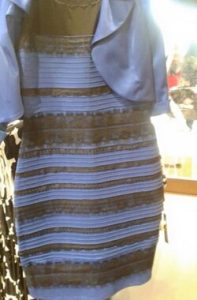
The viral photo of “the dress” — the one some people saw as white and gold while others swore it was black and blue — is a great example of how digital images can change how we experience an object. The real, physical dress actually is blue and black. In person, its colors are set and don’t change. But once it was photographed and shared online, things got complicated. On different screens and under different lighting, the same image looked completely different to different people.
What’s gained from this digital version is a new way of understanding how people see and think. The photo went viral because it revealed how our brains interpret color differently depending on lighting and context. It turned a simple dress into a global conversation about perception, vision, and reality. The internet made it something bigger — not just a dress, but a shared moment that connected millions of people.
What’s lost, though, is the realness of the object. The digital image doesn’t show the actual fabric, texture, or true colors of the dress. It exists in pixels, not in cloth. This makes it unstable — its “truth” changes depending on who’s looking at it and on what device.
In short, the dress shows how digital images can both add to and take away from reality. They can spread ideas and connect people, but they can also blur what’s real and what’s just perception.
Made with the help of ChatGPT Open Ai